
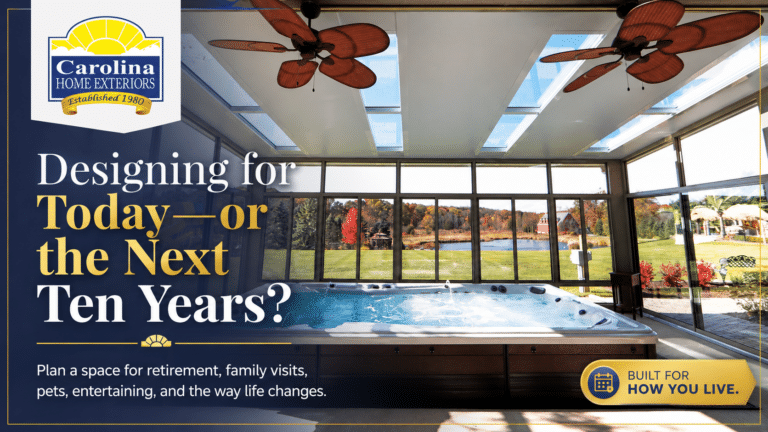
When planning a new sunroom, screen room, pergola, patio cover, or pool enclosure, it is easy to focus on what you want right now.
Maybe you need a shaded place to relax this summer. Perhaps you want a bug-free area for dinner outdoors, more room for visiting family, or a comfortable spot to enjoy your morning coffee.
Those immediate needs matter – but a well-designed outdoor living project should do more than solve today’s problem. It should continue to fit your lifestyle as your family, priorities, and routines change.
Before finalizing your plans, ask yourself an important quetions:
Am I designing this psace only for today – or for the next ten years?
Think Beyond the Way You Live Today
A lot can change over the life of an outdoor living space. You may retire, welcome grandchildre, adopt another pet, begin hosting more family gatherings, or decide climbing steps and moving heavy furniture is no longer as easy as it once was.
Thinking ahead does not mean trying to predict every detail of the future. it means creating a flexible, comfortable space that can adapt insetead of becoming inconvenient or underused.
A screen room that works as a casual retreat today might later become a favorite play area for grandchildren. A four-season sunroom may begin as a home office and eventually become a reading room, hobby space, or comfortable gathering area.
The best designs leave room for life to happen.
Planning For Retirement and More Time at Home
May homeowners along the Grand Strand are approaching retirement or have already entered that stage of life. Retirement often means spending mroe time at home _ and wanting to enjoy that home in new ways.
An outdoor living addition can create a comfortable place to:
- Read or enjoy a quiet morning
- Entertain friends and neighbors
- Work on hobbies
- Enjoy meals with a view
- Relax outdoors without dealiing with excessive heat, insects, or debris.
Consider whether the space will remain comfortable during different seasons and times of day. A screen room may be ideal for enjoying fresh air during mild weather, while a for-season sunroom can provide a more climate-controlled space for year-round use.
Think about how frequently you expect to use the room in the future. Choosing the right type of enclosure now may help you avoid wishnig you had selected a more versatile option later.
Make Room For Visiting Children and Grandchildren
Your new space may initially be designed for one or two people, but what happens when the family visits.
A room that feels spacious with two chairs and a small table can become crowded quickly. Once grandchildren, overnight guests, toys, food, and extra seating enter the picture.
When planning the size and layout, consider:
- How many people you may want to accomodate
- Whether children will need a safe place to play
- Where additional chairs or tables could be placed
- How guests will move between
- Whether the room could serve more than one purpose
A flexible furniture layout and open traffic pattern can help the room transition from a peaceful everyday retreat to a lively family gathering space.
And because grandchildren have a remarkable ability to arrive with twelve times more belongings than expected, a little extra room rarely goes to waste.
Consider Future Mobility Needs
Even it stairs, narrow doorways, and raised thresholds are not concerns today, they may become more important in the years ahead.
Thoughtful design decisions can make an outdoor living space easier and more comfortable for people of different ages and mobility levels. Consider the features such as:
- Wide, conveniently located doors
- Clear walking paths
- Minimal level changes
- Adequate room around furniture
- Easy access from the main living area
- Flooring that is practical and easy to navigate
- Comfortable access to the yard, pool, or patio.
These choices can also benefit visiting relatives, young children, and anyone recovering from an injury. Designing for accessibility is not only about preparing for limitations – it often creates a more open abnd functional space for everyone.
Choose Features That Reduce Maintenance
Your tolerance for weekend maintenance may change over time.
A design that requires frequent staining, painting, cleaning, or rearranging may fee manageable nnow but become less appealing later. When comparing options, ask about the upkeep associated with the framing, roofing, windows, screens, flooring, and other materials.
For example, a pool enclosure can help keep leaves, insects, and other debris away from the pool area, reducing some of the constant skimming and cleanup that comes with an uncovered pool. Screen rooms can also create a more protected outdoor environment while still allowing homeowners to enjoy fresh air.
Motorized screens may provide additional flexibility by allowing an area to be opened or enclosed without repeatedly installing or moving temporary barriers.
The goal is to not necessarily to eliminate maintenance completely. It is to choose a design that lets you spend more time enjoying the space and less time taking care of it.
Plan for the Way You Entertain
Your entertaining style may change over the next decade.
Today, you may host casual cookouts with a few neighbors. In the future, your home might become the regular gathering places for birthdays, holidays, game days, or family dinners.
Think about the practical details before construction begins:
- Where will food and drinks be served?
- Is there room for dining and conversation?
- Where could a television be placed?
- Will you need outlets for lampos, appliances, or chargers?
- Would a ceiling fan improve comfort?
- How will guests enter and exit the space?
- Will doors creaet awkward traffic patterns?
- Is there enough lighting for evening use?
These may seem like small choices, but they can determine whether a space feels effortless or frustrating once it is furnished and in regular use.
Do Not Forget Your Pets
Pets are part of the family, so their needs should be included in the design conversation.
A screen room, sunroom, or enclosed patio can provide a comfortable place for pets tto enjoy the sights and sounds of the outdoors while remaining in a more protected environment.
Homeowners with pets may want to consider:
- Durable or pet-resistant screen options
- Door placement
- Easy-to-clean flooring
- Areas for pet beds or water bowls
- Shade and ventilation
- Safe access to the yard
- Protection around a pool area
It is also worth thinking about future pets. Your calm older dog may eventually be joined by a puppy who believes every screen panel is a personal challenge.
Build Flexibility Into The Design
A specialized space can be useful, but a flexible space can serve your family through multiple stages of life.
For example, a sunroom could function as a:
- Home Office
- Reading room
- Hobby or craft area
- Playroom
- Exercise Space
- Game-day room
- Dining area
- Family gathering room
Rather than designing the entire room around one specific activity, consider a layout that can be rearranged as your needs change.
That may mean preserving open wall space, including enough electrical outlets, planning multiple furniture arrangements, or selecting doors that do not limit how the room can be used.
Think About Long-Term Resale Appeal
You may plan to remain in your home for many years, but resale is still worth considering.
Highly personalized choices may work perfectly for your current lifestyle but appeal to fewer buyers later. A well-proportioned, attractive3, and versatil outdoor living space is more likely to feel like a natural extension of the home.
Potential buysers may appreciate a room that can be used in several ways rather than one desgiend around a highly specific hobby or furniture arrangement.
Quality also matters. Materials, installation, drainage, structural planning, and how well the addition complements the home can all influence how the finished project is perceived.
Design first your own enjoyment – but make choices that another homeowner could understand and appreciate.
Ask the Right Questions Before Choosing a Project
Before deciding which outdoor living solution is right for your home, discuss both your current lifestyle and your future plans.
Helpful questions include:
- How often do we want to use this space?
- Do we want seasonal or year-round comfort?
- Could our household size change?
- Will children, grandchildren, or older relatives use the room?
- How much maintenance are we comfortable handling?
- Could mobility be a concern?
- Will we use the space differently after retirement?
- Do we need room for pets?
- How might the layout affect resale?
- Can the space adapt without major renovations?
These questions can help determine whether your home is best suited for a sunroom, vinyl four-track room, screen room, pergola, patio cover, motorized screen system, or pool enclosure.
Design A Space That Can Grow With You
An outdoor living project is more than an improvement for one season. It can shape how you relax, entertain, gather, and enjoy your home for your.
Carolina Home Exteriors creates customized sunrooms, screen rooms, pergolas, patio covers, porch conversions, pool enclosures, motorized screen systems, and other outdoor living solutions for homeowners throughout Horry and Georgetown Counties. Our design process begins with a conversation about your home, your priorities, and how you want he finished space to function.
When you plan with the next ten years in mind, you are not simploy adding another room or covering a patio. You are creating a space that can evolve with your family, support your lifestyle, and remain useful long after the new-project excitement wears off.
Ready to start planning an outdoor living space for today and tomorrow? Contact Carolina Home Exteriors at 843-651-6514 to schedule a complimentary design consultation or visit our Murrells Inlet showroom to explore your options in person.